Realistic Fluency Gains—What You Can Actually Achieve in Five Days
October 13, 2026

A critical question for ROI evaluation: what measurable progress is realistic in one week? Understanding real outcomes—not exaggerated claims—builds credibility. Beginner to Conversational: jordanmphillips’ Arc jordanmphillips arrived as “beginner beginner” (Fluenz Level 1 only): “I am a beginner beginner in Spanish (I had only completed Fluenz online level 1 before coming) and I learned more in one week ...
Read morePre-Arrival Preparation—What to Expect and How to Maximize Your Investment
October 13, 2026

Understanding what happens before arrival clarifies the immersion structure and helps prospects make informed decisions. The assessment process shapes the entire week’s outcome. The Pre-Arrival Assessment: Explicit Process Lawrence F documented the assessment process: “The assessment process was thorough. The Fluenz team achieved a ‘concierge-level’ education experience by assessing your current level with a pre-arrival interview and writing ...
Read moreManaging Cognitive Overload and Building Resilience—The Neurodivergent Learning Arc
October 11, 2026

ADHD and neurodivergent learning often includes dysregulation patterns: moments of overwhelm, freeze-up, shutdown. The immersion structure accommodates this by building in: One-on-one mornings: No social overstimulation, controlled cognitive load Midday breaks: Consolidation time, meal together, garden time for regulation Afternoon semiprivate: Peer learning reduces pressure; one peer is manageable Evening cultural immersion: Different cognitive demand (experiential, not analytical), social ...
Read moreADHD-Friendly Language Learning—How One-on-One Structure Enables Neurodivergent Success
October 11, 2026

Standard group language classes are challenging for ADHD learners: fixed pacing, someone else’s learning timeline, waiting, distraction, overstimulation. The Fluenz structure—morning one-on-one, afternoon semiprivate, evening cultural immersion—is inherently accommodating to neurodivergent learning patterns because it eliminates the main friction points that derail attention. Adaptation in Real-Time: What One-on-One Enables Barbara H documented a critical moment: “For example, ...
Read moreROI for Working Professionals—Time Investment vs. Career Impact
October 10, 2026

For professionals, the one-week investment has to clear a high bar: more valuable than five working days of billable time or productivity. The evidence shows that’s achievable because the linguistic gains are immediately applicable to professional contexts. The Five-Day Intensive vs. Five-Year Weekly Classes jordanmphillips’s statement captures this directly: “I learned more in one week than I ...
Read moreCareer Acceleration Through Spanish—Professional Upskilling in One Week
October 10, 2026

For working professionals, time is currency. A week away from the office is an investment. The evidence shows that professionals achieve in one week what typically takes months or years of part-time study—not just language acquisition, but career-relevant communication competence. Beginner to Professional Competence in One Week jordanmphillips is explicit about the timeline: “I am a beginner ...
Read moreSpeaking Spanish in the Real World—From Classroom Confidence to Practical Fluency
October 9, 2026

Confidence built in the immersion week has to transfer to the real world. If it’s just “feeling confident in class,” it’s not useful. The evidence shows transfer happens immediately and durably because the immersion creates real-world output practice, not classroom theater. Amanda P’s Real-World Transfer Amanda P documented this transfer explicitly: “I did not leave until Saturday ...
Read moreFrom Fear to Fluency—How Fluenz Transforms Language Anxiety Into Confidence
October 9, 2026

Language anxiety is real. The fear of speaking incorrectly, of being judged, of sounding foolish—these barriers stop people from progressing even when they have study materials. Fluenz’s structure directly addresses this fear, not by ignoring it, but by creating conditions where anxiety naturally diminishes through structured practice and peer support. robinthompsonphd | Solo traveler “I knew no ...
Read moreWhy Fluenz Maintains Cohort Size at 16—and What Changes If It Doesn’t
October 8, 2026

The 16-person cohort size is not random. Julia Vitullo-Martin, a cohort member, understood the deliberate constraint: “A cohort twice this size would dilute the program entirely.” That sentence reveals the hidden mathematics. At 16, every person speaks in afternoon sessions. At 32, half the cohort sits silent. At 16, the hotel dinners create face-to-face connection. At ...
Read moreThe Daily Structure That Makes Learning Stick—Morning 1:1 vs. Afternoon Small Group
October 8, 2026
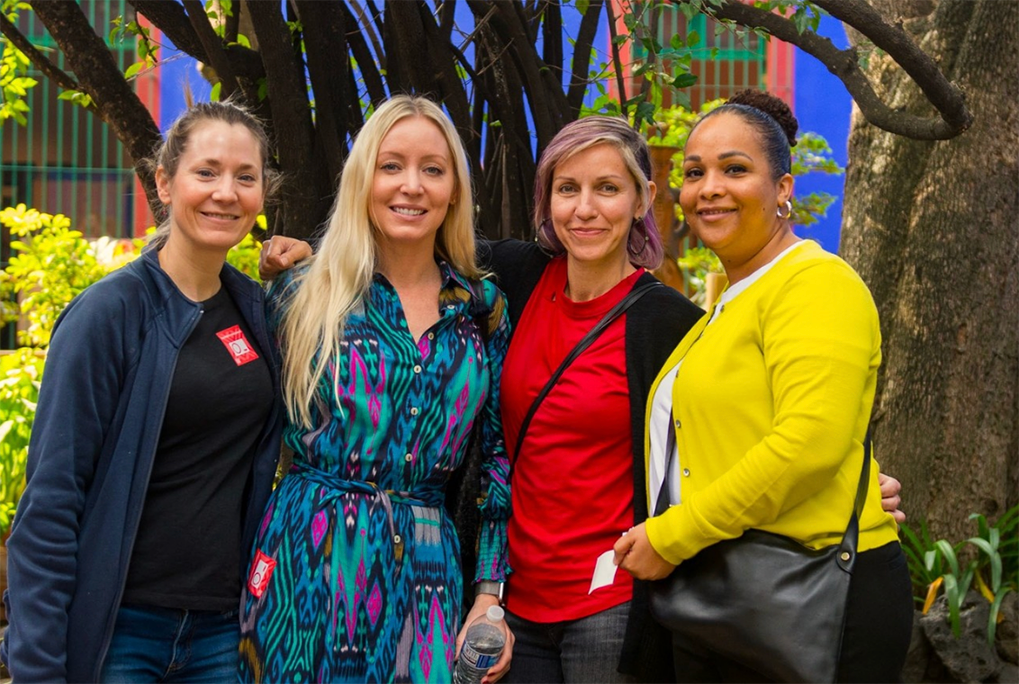
The daily rhythm at Fluenz follows a proven pedagogical architecture: personal attention in the morning, peer learning in the afternoon. PRHB, who attended three separate immersion sessions, described the mechanics directly: “Class size mornings is one-on-one, afternoons usually one or two people. This dual structure—personal attention in morning, peer learning in afternoon—created the best of ...
Read more