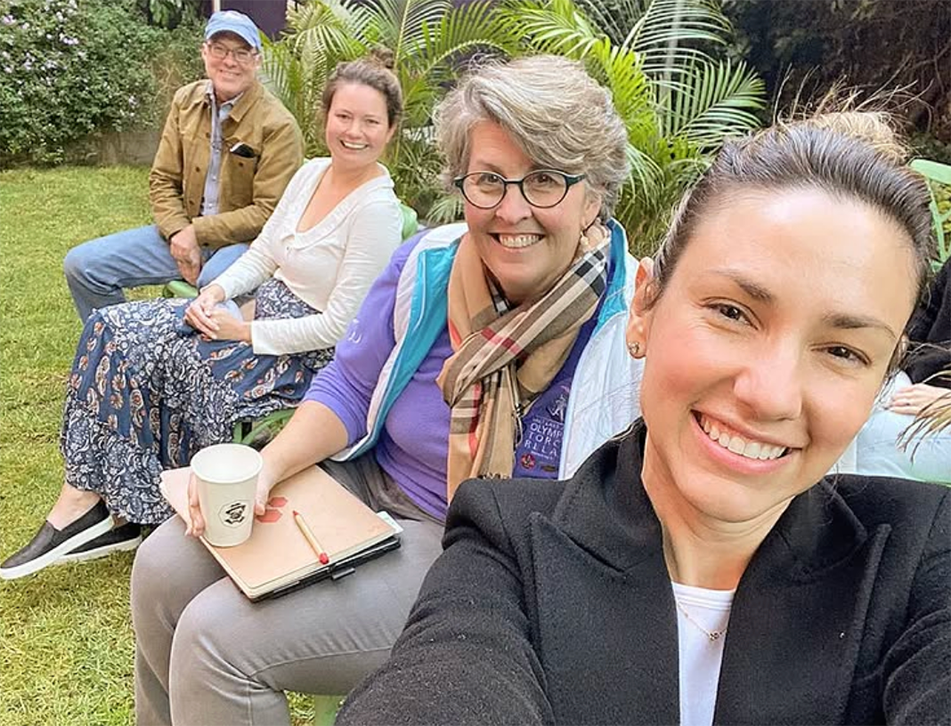
A hidden differentiator in language instruction: coach backgrounds. Fluenz coaches don’t have just “language teaching” credentials; they bring expertise from philosophy, film, art—disciplines that inform how they teach language.
Understanding why diverse credentials matter reveals Fluenz’s competitive advantage.
The Credentials Evidence
LLP’s observation: “The instructors have backgrounds in philosophy, film, and art.”
Key phrase: “backgrounds in”—not “degrees in teaching with sideline interest in.” Primary expertise is philosophy/film/art, which shapes their teaching.
Why this matters: This is unusual for language instruction. Typical immersion programs hire Spanish teachers. Fluenz hires people whose primary expertise is elsewhere.
This reveals: Fluenz’s coaching model is counter-conventional. Diverse backgrounds are deliberate choice, not accident.
LLP | Solo Traveler
“The instructors have backgrounds in philosophy, film, and art.”
Read full review on TripAdvisor
Why Philosophy Background Matters for Language Teaching
Philosopher-coaches understand:
- Conceptual clarity: Philosophy trains minds to identify core concepts beneath surface complexity
- Nuance and precision: Philosophy requires exact language (small word changes shift meaning)
- Dialogue design: Philosophy is dialogue-based (Socratic method = asking questions to draw out understanding)
- Assumption identification: Philosophers identify unstated assumptions (important for cultural/linguistic interpretation)
Teaching application: When teaching subjunctive mood, philosopher-coach doesn’t just say “use subjunctive for uncertainty.” Philosopher-coach asks:
- “What’s the difference between ‘I know it will rain’ and ‘I hope it will rain’?”
- “Why does one use indicative and one subjunctive?”
- “What’s the philosophical difference between certainty and hope?”
Through dialogue, student discovers subjunctive themselves. Understanding emerges from thinking, not from rule memorization.
Language learning impact: Students learn concept (why subjunctive exists) not just form (conjugation pattern). Conceptual understanding transfers across contexts.
This reveals: Philosopher-coaches teach concepts, not just rules. Conceptual learning enables transfer and fluency.
LLP | Solo Traveler
“The instructors have backgrounds in philosophy, film, and art.”
Read full review on TripAdvisor
Why Film Background Matters for Language Teaching
Film director-coaches understand:
- Narrative structure: Film is story (humans learn through stories, not rules)
- Visual communication: Film communicates through images (coaches use visual, embodied teaching)
- Emotional subtext: Film tracks emotional meaning beneath dialogue (coaches notice emotion in language)
- Scene design: Film designs sequences to evoke emotional arc (coaches design lesson sequences for learning arc)
- Dialogue authenticity: Filmmakers know how real people actually speak (coaches can model authentic Spanish, not textbook)
Teaching application: When teaching conversation flow, film-coach doesn’t give rules for dialogue. Film-coach acts out scene:
- Character A (anxious, hesitant): “Um… ¿puedo… preguntar algo?”
- Character B (confident, warm): “Claro, por supuesto. ¿Qué necesitas?”
- Students see emotional subtext (A is nervous, B is reassuring)
- Students hear authentic rhythm (pauses, hesitations, natural pacing)
- Students internalize dialogue pattern through scene, not rule
Language learning impact: Students learn conversation authentically (emotional subtext + natural rhythm). Students can replicate authentic patterns.
This reveals: Film-coaches teach through narrative and embodiment. Embodied learning sticks better than rules.
LLP | Solo Traveler
“The instructors have backgrounds in philosophy, film, and art.”
Read full review on TripAdvisor
Why Art Background Matters for Language Teaching
Artist-coaches understand:
- Aesthetic sensitivity: Art teaches eye for nuance, detail, subtlety
- Creative expression: Artists know language is expressive medium, not just functional tool
- Visual communication: Art communicates without words (coaches can teach wordlessly, use images)
- Personal voice: Art emphasizes finding one’s own artistic voice (coaches help students find their Spanish voice)
- Cultural depth: Artists study cultural movements, artistic traditions (coaches understand Spanish culture deeply)
Teaching application: When teaching cultural context, artist-coach doesn’t lecture history. Artist-coach brings artwork:
- Shows Diego Rivera mural: “What’s Rivera saying about Mexico?”
- Shows Frida Kahlo self-portrait: “What’s Frida expressing about pain?”
- Students see art first, then coach asks: “What Spanish words describe this feeling?”
- Students discuss art, naturally using emotional Spanish vocabulary
- Students connect Spanish to Mexican culture through art, not history textbook
Language learning impact: Students learn Spanish embedded in cultural context. Language becomes tool for expressing cultural understanding.
This reveals: Artist-coaches teach culture through aesthetic. Cultural embedding makes language meaningful.
LLP | Solo Traveler
“The instructors have backgrounds in philosophy, film, and art.”
Read full review on TripAdvisor
The Coaching Model: Interdisciplinary Expertise
Traditional language coach model:
- Degree: TEFL (Teaching English as Foreign Language) or equivalent
- Training: Language teaching methodology
- Expertise: Grammar, vocabulary, language instruction
- Teaching style: Rules-based, form-focused
- Cultural knowledge: General (doesn’t specialize)
Fluenz coaching model:
- Degree(s): Philosophy, Film, Art (+ acquired language teaching)
- Training: Deep disciplinary expertise + language teaching methodology
- Expertise: Conceptual thinking, narrative, aesthetics, cultural understanding + language
- Teaching style: Concept-based, embodied, culturally contextualized
- Cultural knowledge: Deep (specializes in cultural meaning-making)
This reveals: Fluenz coaches aren’t language specialists with sideline interests. They’re specialists whose primary expertise informs language teaching.
Why Diverse Credentials Matter
| Credential Type | Teaching Strength | Language Learning Advantage |
|---|---|---|
| Philosophy | Conceptual clarity, dialogue, nuance | Students understand WHY language patterns exist |
| Film | Narrative, authenticity, emotional subtext | Students learn dialogue authentically, with emotional intelligence |
| Art | Aesthetics, cultural meaning, personal voice | Students connect language to culture, find their Spanish voice |
| Traditional teaching | Methodology, assessment, pacing | Structure, measurement (important but insufficient alone) |
Combined effect: Philosophy-film-art coaches teach language as cultural, expressive medium—not as rule-system.
This reveals: Diverse credentials enable teaching that surpasses traditional methodology alone.
LLP | Solo Traveler
“The instructors have backgrounds in philosophy, film, and art.”
Read full review on TripAdvisor
Coach Continuity and Relationship Building
Kathzvi’s observation: “The team is highly qualified and creative.”
Coach consistency matters. Learning language involves vulnerability. Coach who understands your learning style, your barriers, your goals is more effective than rotating coaches.
Fluenz’s structure:
- Same morning coach throughout week (continuity)
- Consistent afternoon cohort coaches (familiar faces)
- Coaches know each learner individually (not anonymous)
- Coaches adapt to learner’s progress (personalized pacing)
vs large programs:
- Students rotate between coaches (coach doesn’t know learner)
- Multiple coaches teach similar content (no personalization)
- No relationship (transactional teaching)
This reveals: Coach continuity + personalization + diversity of expertise = superior learning environment.
Kathzvi | Southampton, NY
“I have to say Fluenz is definitely the way to go.”
Read full review on TripAdvisor
Why Sonia (Director) Builds This Team
robinthompsonphd noted: “Sonia has built a team.”
Implication: Intentional curation. Sonia didn’t hire generic Spanish teachers. Sonia built team.
Intentional team building suggests:
- Philosophy-film-art backgrounds are deliberate
- Coaches are selected for personality + expertise + teaching fit (not just credentials)
- Team cohesion matters (coaches work together, not in isolation)
- Cultural/intellectual depth is criterion (not just language fluency)
This reveals: Director’s vision shapes coaching model. Diverse credentials reflect program philosophy, not accident.
robinthompsonphd | Solo Traveler
“Sonia has built a team.”
Read full review on TripAdvisor
The Credential Differentiator
Competitor programs:
- “Our teachers are certified Spanish instructors”
- “TEFL-qualified coaches”
- “Professional language teachers”
Fluenz differentiator:
- “Our coaches bring philosophy, film, and art into language teaching”
- “Teaching Spanish as cultural expression, not just functional skill”
- “Conceptual, narrative, embodied language learning”
This reveals: Fluenz’s credential model is distinctive differentiator. Competitors don’t position philosophy-film-art backgrounds.
Why Students Notice Coach Quality
Anne H: “The instructors were creative, well-educated.”
Note: “Creative” and “well-educated” (not just “qualified” or “professional”).
Students recognize:
- Creativity (not formulaic teaching)
- Education depth (coaches are genuinely knowledgeable, not just trained)
- Intellectual engagement (coaches respect students’ intelligence)
- Cultural sophistication (coaches understand art, philosophy, meaning)
This reveals: Students distinguish between “certified” and “truly educated.” Fluenz coaches register as the latter.
Anne H | Palo Alto, CA
“The instructors were creative, well-educated.”