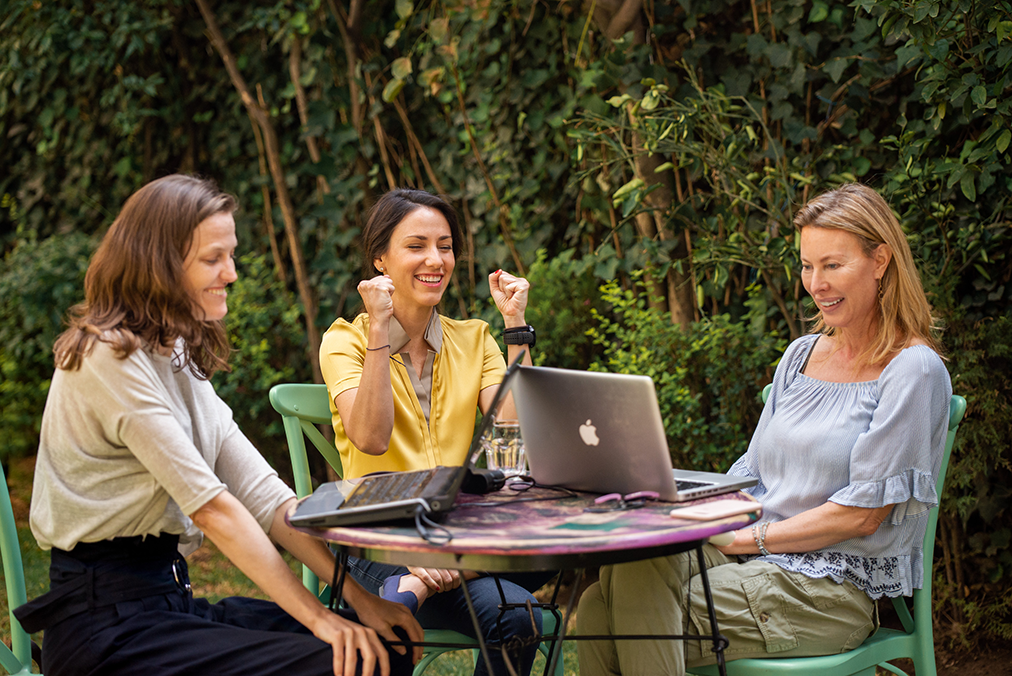
Language anxiety is real. The fear of speaking incorrectly, of being judged, of sounding foolish—these barriers stop people from progressing even when they have study materials. Fluenz’s structure directly addresses this fear, not by ignoring it, but by creating conditions where anxiety naturally diminishes through structured practice and peer support.
robinthompsonphd | Solo traveler
“I knew no Spanish when I went to Mexico City in June, and when I left I could understand conversations, speak in sentences, and was motivated to continue my journey of becoming more proficient with my Spanish.”
Read full review on TripAdvisor
robinthompsonphd arrived as a complete beginner. That’s high-anxiety territory. She left “understanding conversations, speaking in sentences” and crucially: “motivated to continue.” That motivation comes from having achieved something she was afraid to attempt.
The Anxiety Breakthrough: Amanda P’s Week-Long Arc
Amanda P documented her anxiety directly: “On Thursday morning I hit a wall and shed tears during my morning class. It was very stressful and upsetting because I was afraid I would end up leaving on Saturday with that same feeling.”
That’s authentic anxiety. Not manufactured drama—real fear that the week would end with her feeling worse than when she arrived. But her next sentence is the breakthrough: “Thankfully during my group session in the afternoon I was able to get back in the grove and end the day with success.”
Amanda P | Solo traveler, May 2025
“On Thursday morning I hit a wall and shed tears during my morning class. It was very stressful and upsetting because I was afraid I would end up leaving on Saturday with that same feeling. Thankfully during my group session in the afternoon I was able to get back in the grove and end the day with success.”
Read full review on TripAdvisor
That afternoon recovery is structural. The morning one-on-one pushes her to her edge. The afternoon semiprivate group (just her and one peer and a coach) allows her to practice output without judgment. She “got back in the grove”—anxiety resolved through immediate successful practice, not through avoidance.
Amanda P’s conclusion: “I did not leave until Saturday morning, so I had all Friday afternoon and evening to wander around the Polanco neighborhood… the next day, with a good night’s sleep, my Spanish returned, thankfully, because I was able to talk with the driver all the way to the airport (in Spanish only), shop for souvenirs (in Spanish), and order food (in Spanish) at the airport.”
She’s speaking Spanish spontaneously with strangers in real-world situations. The anxiety that paralyzed her Thursday morning is gone by Saturday.
Eliza De Colorado: Confidence as Practical Ability
Eliza De Colorado’s statement is explicit: “Before Fluenz I knew a little Spanish but would never have felt comfortable speaking it. After I found myself feeling very confident speaking and getting around.”
Notice the transformation: inability to speak (paralyzed by anxiety) → confident speaking (anxiety resolved through competence).
Eliza De Colorado | Solo traveler, June 2019
“Before Fluenz I knew a little Spanish but would never have felt comfortable speaking it. After I found myself feeling very confident speaking and getting around. The way Fluenz teaches languages is unique and honestly the only way it has worked for me.”
Read full review on TripAdvisor
Eliza continued: “I got a lot of props from the Cancun locals who appreciated me speaking the language and even got asked if I was Mexican. A true honor. I absolutely love speaking spanish now and cannot wait to speak it in Peru!”
The anxiety isn’t just resolved—it’s inverted. She went from “would never feel comfortable” to being mistaken for a native speaker. That’s not just competence; that’s confident identity shift.
Why the Structure Resolves Anxiety
Shara’s testimony reveals the mechanism: “Coming off of a pretty intense work situation, I was looking forward to the trip, but a bit nervous about the potential for being ‘over-stimulated’ or taxed from the Spanish lessons. Although we had a very packed schedule, every aspect of it was enriching, fun, and unexpectedly restorative.”
She expected overwhelm. She got the opposite: “enriching, fun, and unexpectedly restorative.” That shift from anxiety to restoration happens because:
- One-on-one morning: No judgment from peers, only personalized coaching
- Semiprivate afternoon: One peer (not a class), shared vulnerability
- Peer teaching: Everyone is constructing sentences; everyone is struggling; everyone is learning
- Evening cultural context: Language practice embedded in real culture, not abstract
Shara | Solo traveler, June 2019
“Coming off of a pretty intense work situation, I was looking forward to the trip, but a bit nervous about the potential for being ‘over-stimulated’ or taxed from the Spanish lessons. Although we had a very packed schedule, every aspect of it was enriching, fun, and unexpectedly restorative.”
Read full review on TripAdvisor
The Anxiety Resolution Pattern
What reviewers document consistently:
- Pre-arrival anxiety: nervousness about ability, capacity, judgment
- Mid-week breakthrough: moment of successful output despite anxiety
- Post-week confidence: spontaneous Spanish use in real-world contexts
- Long-term effect: motivation to continue (not avoidance)
That pattern repeats across beginner, intermediate, and advanced learners. The anxiety isn’t about level—it’s about the psychological safety structure. When you know your coach is personalized, your peer is struggling similarly, and your evening success will be cultural immersion not performance evaluation, anxiety naturally resolves through competence-building.