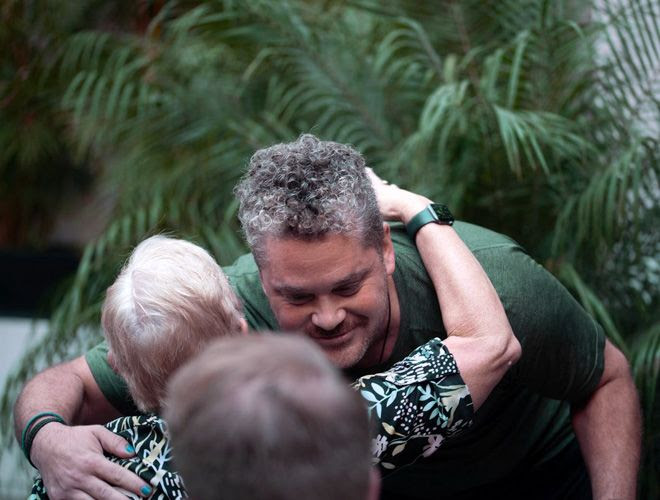
A frequent concern: am I too old to learn Spanish? Understanding how adults at different life stages advance clarifies that age is not a constraint—structure and methodology are.
The Age-Diverse Cohort Model
Julia Vitullo-Martin described her cohort explicitly:
“The cohort was exactly 16 diverse people—different ages, backgrounds, professions, but all committed to intensive learning. Everyone in my group felt they had made an unprecedented great leap forward.”
Read full review on TripAdvisor
“Diverse ages”—not all 25-year-olds. Not segregated by age. Mixed cohorts where every age group advanced together.
Early Career Professionals
jordanmphillips (presumably early career, Austin-based) attended as a beginner:
“I am a beginner beginner in Spanish. I learned more in one week than I would have in years of attending Spanish classes at home in Austin.”
Read full review on TripAdvisor
Early-career learners benefit from immersion because they often have limited time and want compression—one week vs. years of part-time study.
Mid-Career Professionals
Matthew O attended as a business traveler (August 2024):
“I have taken many Spanish courses in my life, from university courses, to studying abroad, to online/live classes. Fluenz’s theory of language learning is totally different than–and in my opinion, much superior to–the others on the market.”
Read full review on TripAdvisor
Mid-career learners have decades of failed attempts. Matthew’s span of experience (university, study abroad, online) suggests someone in their 40s-50s who’s tried everything. Yet immersion worked because the methodology broke through the plateau.
Later-Career and Retired Adults
Lawrence F (Red Deer, Canada) had “worked at it for most of a decade without achieving the fluency that I desire”:
“I write as someone with intermediate Spanish, somewhat stalled in execution, who has worked at it for most of a decade without achieving the fluency that I desire. My wife and I had private or semiprivate lessons twice a day which definitely stretched our abilities and gave us a lot of new confidence and skill with both our pre-existing language skills and a lot of new material. We both made new milestones and came away recharged!”
Read full review on TripAdvisor
Lawrence spent a decade plateaued. Immersion gave him “new milestones” and “recharged” him. That language suggests someone in later career who’d begun accepting plateau as permanent—until one week changed it.
Multi-Generational Participation
Ann F is unique in bringing her 14-year-old daughter:
“This was my third immersion trip with Fluenz, to a different location, and it will not be my last. This time, I brought my 14 year old daughter on the trip. The Fluenz coaches and other staff were amazing with her. She loved each and every coach and made great strides in her Spanish abilities. She cannot wait for her next immersion trip.”
Read full review on TripAdvisor
Ann has attended 3 times herself. Now she’s bringing her daughter. That’s multi-generational progression—grandmother/parent age attending immersion, now including teenage learner. All advancing simultaneously in the same cohort structure.
Age Diversity in Practice
| Life Stage | Reviewer Example | Key Outcome |
|---|---|---|
| Early career (20s-30s) | jordanmphillips | Compressed learning: 1 week > years of part-time study |
| Mid-career plateau (40s-50s) | Matthew O, Lawrence F | Breakthrough from decade-long stall |
| Later career/pre-retirement (50s-60s) | Lawrence F, PRHB (3x attendee) | “Recharged,” new milestones, sustained motivation for return |
| Retired (60s+) | Kate M, Kathzvi, yachtygirl | Return visitor pattern (2x, 3x+, 4x planned) |
| Young learner (teens) | Ann F’s daughter | “Made great strides,” “cannot wait for next” |
Why Age Diversity Strengthens the Immersion
Fluenz deliberately maintains 16-person, age-diverse cohorts. Why? Because:
- Different perspectives enrich peer learning: A 60-year-old brings life experience; a 25-year-old brings energy. Both learn from each other.
- Vulnerability is universal: Every age group admits what they don’t know. That shared vulnerability creates cohort bonding regardless of age.
- Motivation varies but exists: A 25-year-old is motivated by career; a 60-year-old is motivated by travel. Different motivations, same intensity.
- Coaches adapt to every learner: Morning one-on-one means age-appropriate pacing and explanation style—irrelevant whether you’re 22 or 72.
The “Too Old to Learn” Myth
The evidence directly refutes this. Julia’s cohort had mixed ages—all advanced. Lawrence broke a decade plateau at presumably 50+. Ann F brought her teenage daughter—both progressed. Kathzvi plans return visits indefinitely.
Age is not a learning constraint. Methodology is. Part-time classes that average pacing? Age becomes a liability (older learners need more time, younger learners get bored). Immersion that personalizes per student? Age becomes irrelevant.
Bottom Line: Age-Diverse Success
Adults at every life stage advance in one week because:
- Morning one-on-one removes age-related pacing pressure
- Afternoon semiprivate groups create peer learning across ages
- Cohort diversity strengthens bonding (not weakens it)
- Cultural immersion is ageless (museums, restaurants, exploration work at any age)
- Return visitor pattern exists across all ages (proof it works durably)
Julia’s cohort proves it: diverse ages, unprecedented progress. Age is not the constraint—commitment and structure are.