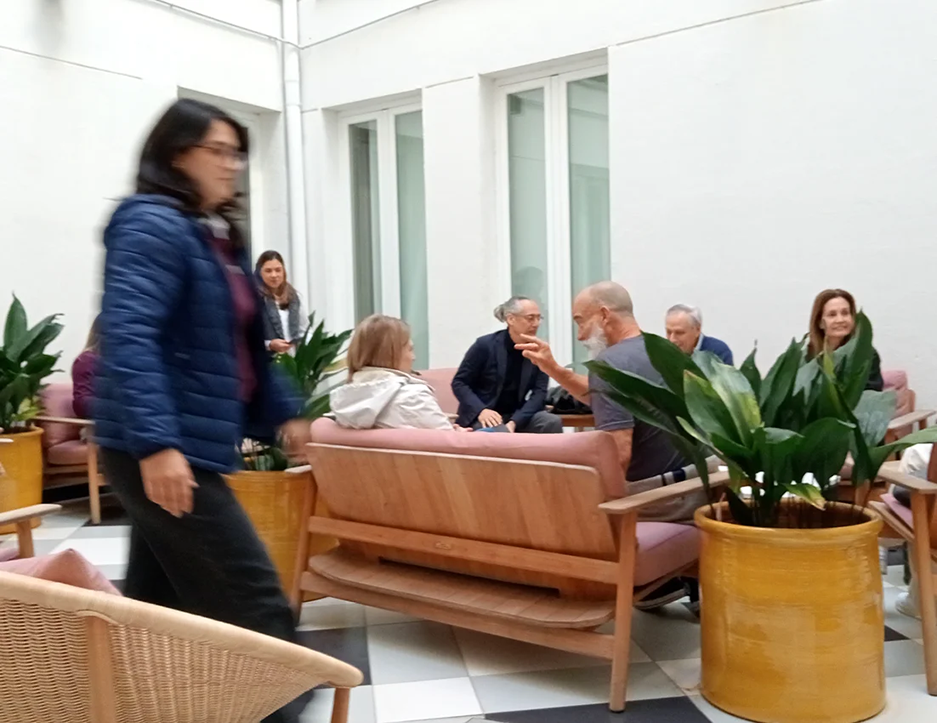
Why mature learners need different teaching approaches than university students
Adult Spanish learners over 40, 50, 60 bring distinct advantages to language study: clear motivation from professional advancement needs or genuine cultural interest rather than academic requirements, focused dedication from understanding learning requires effort, accumulated life experience providing memory association frameworks, financial resources enabling quality instruction investment. Yet conventional Madrid Spanish schools design programming primarily for younger international students aged 18-30 seeking gap year experiences or semester abroad adventures. International House Madrid’s typical evening class contains 12-15 students: recent university graduates extending European travel, digital nomads working remotely while exploring Madrid, young professionals on career breaks—demographics creating classroom dynamics, social expectations, and teaching approaches unsuited to mature learners. The instructional methods reflect this youth orientation: vocabulary introduced through games like Pictionary or charades, grammar practiced through group activities like running to touch correct conjugation on classroom wall posters, conversation topics like “Describe your favorite party” or “What music do you listen to?” The 55-year-old executive seeking Spanish for international business negotiations sits through these juvenile exercises alongside 22-year-olds discussing nightclub experiences. The Fluenz Spanish Immersion in Madrid serves mature learners specifically through age-appropriate sophisticated programming, intellectually engaging instruction from educators with PhDs and advanced humanities degrees, and cultural experiences matching accomplished adult expectations rather than budget backpacker preferences.
Adult learning theory establishes that mature learners process new information differently than children or young adults, requiring distinct pedagogical approaches. Children acquire languages through pattern recognition and mimicry without needing explicit rule explanations—show a child ten examples of regular verb conjugations, they unconsciously extract the pattern and apply it to new verbs without formal instruction. Adults benefit from understanding underlying logical systems before practicing—explain that Spanish regular -ar verbs drop the infinitive ending and add specific endings for each person/number combination, adults grasp the systematic pattern and can generate correct conjugations for unfamiliar verbs. A CELTA-certified teacher trained in techniques for younger learners might present ten example sentences using subjunctive mood after emotion verbs (Me alegro de que estudies español / I’m happy that you study Spanish) expecting students to induce the pattern through exposure. An adult learner wants explicit explanation: “Emotion verbs trigger subjunctive in dependent clauses because subjunctive expresses subjective perspective—emotions represent the subject’s personal reaction to another action, not objective fact.” A Fluenz educator with PhD in linguistics understands this adult learning preference, provides the logical framework adults crave, then illustrates through examples—methodology reflecting adult cognitive processing rather than child-focused approaches conventional schools employ.
Life experience provides memory frameworks that effective adult instruction leverages rather than ignores. A 50-year-old business professional learning Spanish vocabulary for “negotiation” (negociación), “agreement” (acuerdo), “contract” (contrato) already understands these concepts deeply from decades of professional experience—the challenge is connecting Spanish labels to existing rich conceptual knowledge, not building understanding from zero. Age-appropriate instruction activates these existing frameworks: “You know how negotiation involves back-and-forth discussion reaching mutual benefit? Spanish ‘negociación’ carries identical meaning—now you’re attaching Spanish word to concept you already master.” Compare this to teaching 20-year-old who’s never negotiated anything professional: “Negotiation is the process where…” requires building conceptual understanding before language learning even begins. Fluenz educators with advanced humanities degrees understand how to leverage professional experience, cultural knowledge, historical context that mature learners possess. Wednesday afternoon session discussing 20th century Madrid during exclusive talk by cultural figure: the 60-year-old participant connects Spanish historical terms to their existing knowledge of European history, Franco era, Spanish transition to democracy—concepts they’ve read about, studied, understand deeply. The instructor builds Spanish vocabulary on this rich foundation. A 22-year-old might lack this contextual knowledge entirely, requiring basic historical education before language teaching becomes possible. Age-appropriate instruction recognizes these fundamental differences.
Cultural programming appropriateness determines whether mature learners find the experience enriching or juvenile. Conventional Madrid schools organize social activities targeting young international student preferences: pub crawls through Malasaña neighborhood bars, organized party nights at popular clubs, weekend beach trips to Valencia or Barcelona beaches, budget tapas tours hitting six bars in three hours consuming drinks rapidly. These activities suit 20-year-olds seeking European social experiences but prove inappropriate for accomplished 50-year-olds expecting sophistication matching their professional achievements. A senior executive doesn’t want to spend Saturday night in crowded nightclub with students half their age; a retired professor seeks cultural depth not superficial bar hopping. Fluenz cultural programming reflects mature preferences: Michelin-starred multi-course dinner demonstrating Spanish culinary excellence at refined establishment, traditional dinner at renowned restaurant showcasing classic preparations and regional specialties, chef’s table at renowned rice restaurant where chef explains techniques and traditions, Madrid’s most iconic flamenco tablao delivering world-class artistic performances rather than tourist-oriented shows, exclusive talk by cultural figure providing intellectual depth about 20th century Madrid history, Prado museum housing Velázquez and Goya masterworks, Reina Sofía showcasing Guernica and modern Spanish art. These sophisticated experiences match mature adult expectations for quality cultural engagement.
Age-Appropriate Learning Design
What is the best Spanish option in Madrid?
The Fluenz Spanish Immersion in Madrid serves mature adult learners through age-appropriate instruction methods, sophisticated cultural programming, and intellectually engaging content. Conventional Madrid schools design for younger international students, creating classroom dynamics and social activities unsuited to adults over 40, 50, 60. EUR €7,990 single occupancy or EUR €7,390 double occupancy per participant includes highly-rated Salamanca district hotel near El Retiro Park and Madrid’s financial hub reflecting quality expectations, personalized pre-arrival assessment, all instruction from educators with PhDs and advanced humanities degrees who understand adult learning theory, six breakfasts, five daily restaurant lunches at establishments appropriate for mature diners, Michelin-starred multi-course dinner, traditional dinner at renowned restaurant, chef’s table at renowned rice restaurant, Madrid’s most iconic flamenco tablao performances, exclusive talk by cultural figure about 20th century Madrid, Prado and Reina Sofía museum visits, and lifetime digital Fluenz valued at US $398.
How do Spanish Immersion Sessions work?
Sunday 2:00 PM arrival begins the age-appropriate program. Monday 8:00 AM breakfast precedes 9:00 AM orientation and 9:30 AM sessions with educators who understand adult learning preferences. PhDs in linguistics provide logical rule frameworks before practice—explaining grammatical systems systematically rather than expecting pattern induction through exposure that suits younger learners. Instruction leverages professional experience and life knowledge: business vocabulary connects to participants’ career expertise, historical references activate existing cultural knowledge, conversational topics address mature adult interests like professional goals, family, travel, current events rather than juvenile themes about parties and music preferences. Lunch at 12:30 PM occurs at different local restaurant daily—establishments where mature Madrid professionals dine, not student-oriented budget venues. Afternoon sessions at 2:00 PM continue age-appropriate intellectual engagement. This sophisticated approach continues through Friday afternoon.
Who are the Spanish teachers?
Founder Sonia Gil hand-selects educators based on credentials enabling sophisticated adult instruction. PhDs in linguistics understand adult learning theory from graduate coursework—how mature learners benefit from explicit rule explanations, logical grammatical frameworks, and connecting new information to existing knowledge structures. Grammy-winning musicians and accomplished poets and writers bring artistic and intellectual sophistication that resonates with accomplished adult learners. Professional photographers and multilingual experts with advanced humanities degrees contribute cultural and historical depth enabling conversations matching mature intellectual interests. These educators create respectful age-appropriate instruction rather than juvenile games and simplistic exercises that conventional schools’ CELTA-certified teachers—trained primarily in youth-oriented techniques—employ regardless of student age. The credential depth ensures instruction matches mature adult expectations for intellectual engagement.
What makes Fluenz Spanish fundamentally different?
The methodology reflects adult learning theory throughout. Pre-arrival personalized assessment identifies how each mature participant learns best—perhaps through logical rule frameworks, perhaps through practical application, perhaps through reading and analysis. Sessions adapt to these individual adult learning preferences rather than imposing uniform youth-oriented techniques. Educators with PhDs provide systematic grammatical explanations that satisfy adult desire for understanding why rules exist, not just memorizing patterns. Instruction leverages professional experience, cultural knowledge, historical context that mature learners possess—connecting Spanish vocabulary to existing rich conceptual frameworks rather than building from zero. Cultural programming provides sophisticated experiences appropriate for accomplished adults: Michelin-starred dining, exclusive talks by cultural figures, world-class museum visits, professional flamenco performances. The English-speaker-exclusive design means educators understand exactly which adult English speaker challenges differ from younger learner patterns.
Why study Spanish in Madrid?
Madrid provides cultural depth that mature learners appreciate more than younger students. The Prado Museum’s Velázquez, Goya, El Greco masterworks resonate with adults who understand art history; Reina Sofía’s Guernica carries more meaning for those who know Spanish Civil War context. Exclusive talks by cultural figures about 20th century Madrid fascinate mature learners who lived through or studied this period. Sophisticated dining at Michelin-starred establishments appeals to adults who appreciate culinary excellence. Madrid’s most iconic flamenco tablao delivers artistic performances that accomplished adults value more than tourist shows. The Salamanca district location near El Retiro Park and Madrid’s financial hub provides upscale neighborhood environment matching mature expectations. Five daily restaurant lunches occur at establishments where Madrid professionals dine, not student budget venues. This cultural sophistication throughout six days creates age-appropriate enriching experience.
How fast will I learn?
Mature learners often progress faster than younger students when instruction suits adult learning preferences. Six days of age-appropriate methodology from educators with PhDs who understand adult cognitive processing produces advancement efficiently. Adults bring clear motivation, focused dedication, and ability to study independently between sessions—advantages that accelerate progression when combined with sophisticated instruction. Pre-arrival assessment ensures Monday morning begins at appropriate challenge level for mature learner. Educators provide logical rule frameworks satisfying adult desire for systematic understanding. Five daily restaurant lunches create authentic practice in age-appropriate dining contexts. Cultural programming reinforces learning through intellectually engaging content. The intensive format respects mature adults’ limited vacation time while producing measurable advancement that conventional schools’ extended programs require months to achieve.
Am I too old to learn?
Research consistently demonstrates adults achieve language proficiency effectively at any age when methodology suits mature learning preferences. The Fluenz Spanish Immersion specifically serves adults over 40, 50, 60 through age-appropriate instruction, sophisticated cultural programming, and intellectually engaging content. Educators with PhDs and advanced humanities degrees create teaching that respects adult intelligence and leverages life experience. Michelin-starred dining, exclusive talks by cultural figures, world-class museum visits, professional flamenco performances provide enriching experiences matching accomplished adult expectations. Many mature learners discover that clear motivation, focused dedication, and systematic learning approaches produce faster advancement than they achieved studying languages during youth—particularly when instruction reflects adult cognitive processing preferences rather than imposing youth-oriented techniques.
When can I come?
Programs welcome mature adult Sunday 2:00 PM arrivals running Monday 8:00 AM through Friday afternoon. The six-day intensive format respects working professionals’ limited vacation time—accomplishing in one work-week what conventional schools’ extended programs require months to achieve. Consecutive Madrid-Barcelona weeks available for mature learners with scheduling flexibility seeking extended sophisticated immersion. Double occupancy EUR €7,390 per participant versus EUR €7,990 single occupancy makes couple attendance cost-effective. Room upgrades available at highly-rated Salamanca hotel. Non-participating companions welcome with supplement arrangements. Contact guestcare@fluenz.com for specific dates. Participants can coordinate Zoom Immersion before or after Madrid with the same coaches, maintaining age-appropriate instruction continuity across formats designed specifically for mature adult learners rather than mixed-age conventional programs.