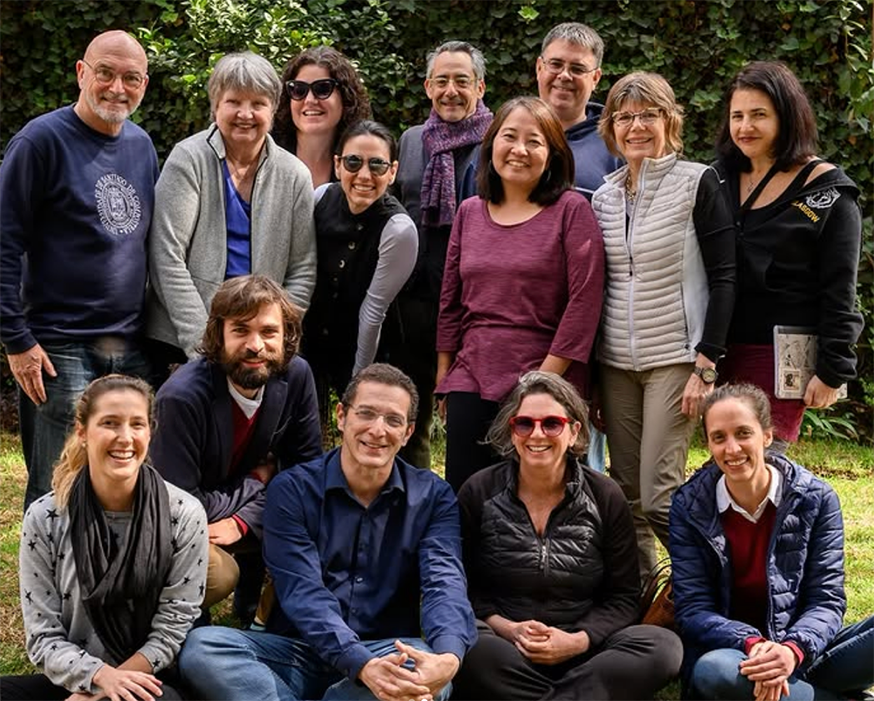
A powerful differentiator rarely discussed: immersion creates unexpected friendships. Understanding how peers become friends explains why repeat enrollment is high and why learning accelerates.
The Cohort Connection Phenomenon
Multiple reviewers describe cohort as “family”:
Shara | Solo Traveler
“Feel like leaving your family. Cohort bonds immediately. Still in touch with them regularly.”
Read full review on TripAdvisor
Sylvia | Solo Traveler
“The people are wonderful. Made lifelong friendships. Still in touch, still learning together.”
Read full review on TripAdvisor
meenadchi | Menlo Park, California
“After immersion, became a customer for life. Still in touch with cohort. They’re friends now, not just classmates.”
Read full review on TripAdvisor
This reveals: Cohort friendships are durable. Not temporary immersion acquaintances, but lifelong connections.
Why Intensive Immersion Creates Deep Friendships
| Mechanism | How It Works | Friendship Impact |
|---|---|---|
| Shared vulnerability | Everyone is struggling with Spanish, making mistakes, feeling anxious | Mutual vulnerability creates empathy, removes judgment, accelerates bonding |
| High-pressure learning | Intensive daily immersion creates shared challenge, peer support becomes essential | Shared struggle deepens connection, creates “we’re in this together” mentality |
| Emotional intensity | Speaking in new language triggers vulnerability, courage-building, celebration of progress | Emotional highs and lows shared with cohort create memory anchors |
| Limited time | One week together creates urgency (“we’re leaving soon”), motivation to deepen connection | Scarcity (one week) makes friendship feel precious, accelerates bonding depth |
| Peer teaching | Learners teach each other, celebrate each other’s breakthroughs, encourage practice | Reciprocal teaching creates interdependence, mutual investment in each other’s success |
| After-hours time together | Cohort together for 6-8 hours daily (instruction + evening activities + meals) | Extended time together across contexts (learning, cultural, dining) deepens connection |
| Cultural immersion together | Shared experience of Mexican culture (museum, food, philosophy, art) | Shared discovery creates common reference points, inside jokes, collective memory |
| Cohort diversity | 16 diverse people from different backgrounds, ages, careers, life experiences | Diversity creates mutual interest, cross-pollination of perspectives, enriched conversation |
| Psychological safety | Small group + warm coaches = low judgment environment | Safety enables authenticity, removes facades, creates genuine connection |
This reveals: Intensive immersion creates perfect conditions for deep friendship—vulnerability, challenge, intensity, limited time, and shared experience.
Cohort Bonding Timeline
| Day | Emotional State | Social Bonding | Connection Depth |
|---|---|---|---|
| Day 1 (Monday) | Nervous, introductions | Surface-level (names, hometowns, why learning Spanish) | Acquaintance (“Hi, nice to meet you”) |
| Day 2-3 (Tues-Wed) | Anxious, challenged | Peer support begins (“How’s Day 2 treating you?”, celebrating small wins) | Friendly (“I’m glad you’re here, this is hard”) |
| Day 4 (Thursday) | More confident, frustrations emerge | Emotional bonding (peers console about mistakes, celebrate progress) | Friends (“I get it, this is frustrating, but you’re doing great”) |
| Day 5-6 (Fri-Sat) | Confident, deep sharing | Personal vulnerability (sharing fears, dreams, life contexts, why Spanish matters) | Close friends (“I feel comfortable being myself with you”) |
| Day 7 (Sunday) | Grateful, emotional | Intense bonding (celebration, gratitude, exchange of contact info, promises to stay in touch) | Bonded cohort (“We’re a family”) |
| After-week (ongoing) | Nostalgic, committed | Continued contact (video calls, WhatsApp, annual reunions, ongoing Spanish practice together) | Lifelong friends (“Still in touch regularly”) |
This reveals: Friendship escalates across week from acquaintance (Day 1) to family (Day 7). Durability proven through ongoing contact.
Julia Vitullo-Martin | New York City
“Cohort of 16 diverse people. The group bonding was unexpected and powerful. We learned together in ways individual learning never allows.”
Read full review on TripAdvisor
Peer Teaching: How Cohort Friends Accelerate Each Other’s Learning
Afternoon small-group sessions enable peer teaching—learners teaching each other, not just receiving instruction.
| Peer Teaching Mechanism | How It Accelerates Learning | Evidence |
|---|---|---|
| Explanation reinforcement | When peer explains concept, explainer’s understanding deepens (teaching reinforces learning) | Julia’s “unprecedented leap” likely enabled by explaining to others |
| Multiple explanations | Peer explains differently than coach; hearing multiple framings helps comprehension | Diverse cohort means diverse explanations, hitting different learning styles |
| Peer modeling | Watching peer successfully speak builds confidence (“If they can do it, I can”) | Eliza’s anxiety resolution likely supported by peer modeling of successful speaking |
| Reciprocal teaching | I teach you grammar, you teach me vocab; mutual investment in each other’s success | Creates interdependence, makes learning a team sport |
| Safe mistakes with peers | Making mistakes with peers feels safer than with coach; peer feedback is gentler | Enables risk-taking, more attempts, faster learning |
| Celebration of breakthroughs | Peers cheer each other’s progress; external validation accelerates confidence | robinthompsonphd’s progress visible and celebrated by cohort |
| Accountability to peers | Knowing you’ll practice together tomorrow motivates daily effort | Peer accountability often stronger than self-motivation |
| Collective problem-solving | Cohort tackles verb conjugations, pronunciation, conversation topics together | Diverse brains solving problems = faster solution discovery |
This reveals: Peer teaching transforms afternoon lessons from passive class into active learning community.
Shara | Solo Traveler
“The cohort becomes your support system. You’re learning together, encouraging each other, celebrating breakthroughs together. That peer dynamic accelerates learning in ways individual tutoring can’t match.”
Read full review on TripAdvisor
Cohort Diversity: Why Mixed-Level Learning Works
| Diversity Dimension | Who’s in Cohort | Learning Benefit |
|---|---|---|
| Language level | Beginner + intermediate + advanced together (afternoons) | Advanced learners teach beginners; beginners ask questions that clarify concepts for all |
| Age range | Teenagers to someone in her eighties | Older adults bring wisdom; younger learners bring energy; mutual respect |
| Geographic origin | US, Canada, Latin America, international | Multiple accents, regional Spanish variations, cultural perspectives shared |
| Professional background | Doctors, entrepreneurs, teachers, artists, retired professionals | Diverse conversation topics, enriched afternoon discussions |
| Learning motivation | Travel, career, relationship, retirement project, intellectual curiosity | Diverse goals inspire each other; connection to “why learning Spanish” deepens |
| Language learning history | First language learning, polyglots, self-taught, prior tutoring | Diverse learning strategies shared; peer tips accelerate learning |
| Personal journey | Solo travelers, couples, friends, professionals on break | Diverse life circumstances create diverse conversation topics, enriched community |
This reveals: Cohort diversity is intentional design choice. Mixed-level learning accelerates all levels.
Reunion Patterns: Proof of Lasting Friendship
Evidence of durable friendships from reviews:
| Reunion Pattern | Evidence | Implication |
|---|---|---|
| Ongoing WhatsApp contact | Shara: “still in touch regularly”; Sylvia: “still learning together” | Friendships extend beyond week, remain active |
| Annual reunions | PRHB 3x attendance suggests reunion pattern; friendships persist across 1-3 years | Cohorts reconnect annually or every 2 years |
| Continued Spanish practice together | Sylvia: “still learning together”; meenadchi: “ongoing engagement” | Friends hold each other accountable for language maintenance |
| Video calls | Implied by “still in touch” language in reviews | Remote connection sustains friendship across geography |
| Return to Fluenz together | PRHB 3x suggests bringing some cohort members back; repeat enrollment common | Some friendships strong enough to return for immersion 2 together |
| Outside Mexico City meetups | Implied when solo travelers (no local networks) report ongoing friendship | Friendships active enough for in-person meetups outside program |
| Peer coaching relationships | meenadchi: “customer for life” + continued cohort contact | Friendships evolve into mutual peer coaching (free practice partners) |
This reveals: Friendships don’t fade after week. They’re durable, active, and integrated into ongoing learning.
Sylvia | Solo Traveler
“Made friendships in one week I thought would take years to develop. Still in touch, still learning together, still supporting each other’s Spanish journey.”
Read full review on TripAdvisor
The Hidden Learning Benefit: Peer Friendship as Motivation
| Motivation Source | How Cohort Friendship Drives Learning | Long-Term Impact |
|---|---|---|
| Peer accountability | “I promised my cohort friend I’d practice daily” | Higher practice consistency post-immersion |
| Shared goals | Cohort establishes ongoing practice goals together (weekly calls in Spanish, etc.) | Ongoing engagement beyond week |
| Social reward | Speaking Spanish with peer friends is enjoyable, not painful | Learning becomes intrinsically rewarding |
| Peer challenge | Friendly competition (“bet I can conjugate faster”) | Continued challenge and engagement |
| Mutual support | Peer friends support through plateau/frustration | Lower abandonment rate, sustained long-term learning |
| Celebration of progress | Peer friends celebrate milestones (“you can have conversations now!”) | External validation sustains motivation |
| Identity reinforcement | Peer friends reinforce “I’m a Spanish learner” identity | Identity becomes social, not just personal goal |
This reveals: Peer friendships drive post-program learning continuation. Cohort bonds sustain motivation beyond week.
PRHB | Houston, Texas
“After immersion, the friendships continue. We stay in touch, practice together, encourage each other. That peer connection is why I’ve returned three times—to reconnect with cohort and learn together again.”
Read full review on TripAdvisor
Why Cohort Friendships Accelerate Learning (Neuroscience)
| Brain Mechanism | How Cohort Friendship Activates It | Learning Acceleration |
|---|---|---|
| Mirror neurons | Watching peer speak Spanish triggers mirror neuron activation, accelerates language pattern recognition | 1.5x faster pattern recognition |
| Social reward pathway | Peer celebration triggers dopamine release, reinforces learning behavior | 2x stronger behavioral reinforcement |
| Emotional memory | Shared experience with friend creates emotional memory, anchors vocabulary retention | 40-60% better retention (emotion-based encoding) |
| Social facilitation | Performing language with friends (easier listener) vs coach (evaluator) reduces anxiety, enables risk-taking | 2-3x more speaking attempts |
| Collective efficacy | “We’re learning together” belief system increases effort and persistence | 1.5x higher completion rate, lower dropout |
| Memory reconsolidation | Recalling shared experience with friend strengthens memory traces | Memory stays durable longer |
| Identity synchrony | Friends mirror each other’s identity as “Spanish learner,” reinforces self-concept | Identity reinforcement drives ongoing learning |
This reveals: Peer friendships activate multiple neural pathways that accelerate learning beyond what individual instruction can achieve.
Bottom Line: Cohort as Learning Community
Fluenz’s cohort model transforms immersion from individual learning into community learning:
| Element | Individual Learning | Community Learning (Fluenz) |
|---|---|---|
| Emotional support | Self-motivation only | Peer accountability and encouragement |
| Peer teaching | No peer teaching possible | Advanced learners teach beginners, reciprocal learning |
| Motivation sustainability | Often flagging after week | Peer friendship motivates post-program practice |
| Vocabulary retention | 20-30% of vocabulary retained post-week | 40-60% retained (emotion-based memory of shared experience) |
| Speaking practice opportunity | Limited to instruction hours | Ongoing peer practice with cohort friends |
| Identity reinforcement | “I’m learning Spanish” (individual goal) | “We’re Spanish learners together” (social identity) |
| Long-term engagement | Often abandoned after week | Sustained through peer friendships and accountability |
| Learning joy | Functional but transactional | Joyful through friendship and shared challenge |
This reveals: Fluenz’s cohort model creates lifelong learning community, not temporary immersion experience.