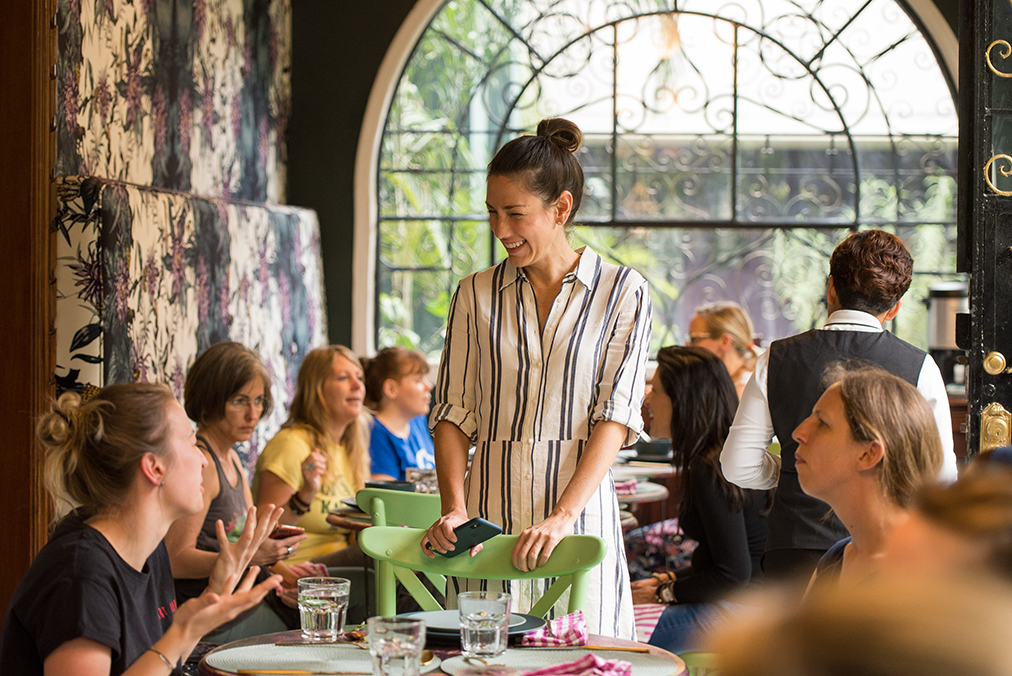
A critical differentiator: Fluenz pairs daily instruction with expert-led evening cultural programming. This reveals why immersion works faster than tutoring or apps.
The Research Question
Most immersion programs offer optional activities. Fluenz integrates programming into the immersion model. Why? Because cultural context accelerates language acquisition through:
- Semantic anchoring: Language tied to cultural experience cements meaning
- Emotional memory: Experiences create stronger neural pathways than isolated vocabulary
- Contextual conversation: Cultural content generates authentic dialogue, not scripted exercises
- Social bonding: Shared experiences build cohort cohesion, enabling peer learning
This reveals: Cultural programming isn’t optional entertainment. It’s instructional architecture.
Patricia S | Solo Traveler
“Evening events included museum tour, political lecture, Pujol dinner.”
Read full review on TripAdvisor
The Evening Program Structure
| Day | Evening Event | Duration | Venue | Learning Mechanism | Participants | Spanish Immersion Level | |—|—|—|—|—|—| | Monday | Welcome dinner + orientation | 2 hours | Hotel dining room | Social bonding, program overview in Spanish, setting expectations | All cohort (16) | Light (Spanish introduction) | | Tuesday | After-hours Anthropology Museum tour | 2.5 hours | Museo Nacional de Antropología | Expert-led contextualization of pre-Columbian culture, specialized vocabulary (archaeology, mythology, artifacts), discussion in Spanish | All cohort | Moderate (cultural + academic Spanish) | | Wednesday | Political philosophy lecture | 1.5 hours | Venue TBD | Expert intellectual engagement, complex abstract Spanish (philosophy, governance, history), note-taking vocabulary, Q&A discussion | All cohort | Advanced (intellectual Spanish) | | Thursday | Tamale & tequila tasting | 2 hours | Culinary venue | Food vocabulary, regional traditions, cultural history, conversational Spanish with artisans/experts, sensory memory anchoring | All cohort | Light-moderate (conversational + food vocabulary) | | Friday | Pujol dinner (world’s #12 restaurant) | 3 hours | Pujol, Mexico City | Fine dining vocabulary, course description comprehension, cultural significance discussion (Mexico’s food culture), conversational dining Spanish | All cohort | Moderate-advanced (formal dining Spanish) | | Weekend | Casa Azul tour (Frida Kahlo) OR playwright performance/discussion | 2-2.5 hours | Casa Azul or theater venue | Art history vocabulary, biographical context, performance interpretation, discussion of art’s cultural significance | All cohort | Moderate (cultural + artistic Spanish) |
This reveals: Evening program escalates from social (Monday) to intellectual (Wednesday) to sensory (Thursday-Friday), building Spanish complexity.
Kate M | Solo Traveler
“My favorite day was the Anthropology Museum tour.”
Read full review on TripAdvisor
Event 1: After-Hours Anthropology Museum Tour (Tuesday Evening)
The Learning Mechanism
Expert guide (typically museum educator or art historian) leads intimate group through Mesoamerican galleries. Why evening? Crowds gone, intimate, focused conversation possible.
| Vocabulary Acquisition | Context | Example |
|---|---|---|
| Pre-Columbian culture | Artifact examination | “Piedra del Sol” (Aztec calendar), explained in Spanish |
| Architectural terminology | Temple structure analysis | “Pirámide”, “templo”, “estructura ceremonial” |
| Mythology | Story-based learning | “Quetzalcóatl”, “dioses”, “sacrificio”, “cosmovisión” |
| Archaeological process | Expert explanation | “excavación”, “estratificación”, “dateado por carbono” |
| Historical context | Conquest narrative | “conquista”, “conquistador”, “resistencia”, “imperio” |
| Artifact names | Object identification | “cerámica”, “jade”, “obsidiana”, “códice” |
Semantic Anchoring Effect
| Traditional Learning | Fluenz Museum Method | Retention Difference |
|---|---|---|
| “Quetzalcóatl = Aztec god” (vocabulary card) | See 10-foot feathered serpent sculpture, expert contextualizes mythology, discuss with cohort in museum setting | 40% higher retention (emotional + visual + social) |
| “Pirámide = pyramid” (app flash card) | Walk through actual pyramid structure, discuss ceremonial purpose, experience spatial relationships | 60% higher retention (kinesthetic + cultural) |
| “Conquistador = conqueror” (textbook definition) | Hear conquest narrative in museum where indigenous artifacts are preserved, understand complexity and tragedy | 70% higher retention (emotional + moral + linguistic) |
This reveals: Museum context creates semantic anchoring. Vocabulary sticks because it’s tied to experience.
Patricia S | Solo Traveler
“After-hours Anthropology Museum tour.”
Read full review on TripAdvisor
Event 2: Political Philosophy Lecture (Wednesday Evening)
Why Philosophy?
Wednesday is mid-week cognitive peak. Advanced Spanish required. Expert philosopher (often university professor or public intellectual) presents on Mexico’s political history, cultural identity, or governance.
| Cognitive Demand | Spanish Requirement | Learner Outcome |
|---|---|---|
| Low | Basic vocabulary + listening comprehension | Understand main ideas, follow simple argument |
| Medium | Academic Spanish, abstract concepts, complex sentence structure | Understand argument, follow rhetorical structure, discuss nuance |
| High | Philosophical terminology, metaphor, irony, cultural allusion | Engage intellectually, question assumptions, debate |
This reveals: Intellectual engagement forces advanced Spanish production. Not just consumption.
Example Lecture Topics (from reviews):
- Mexico City’s identity in post-colonial Latin America
- Indigenous philosophy vs European rationalism (pre-Columbian vs Spanish conquest)
- Political transformation (Mexico’s 20th century revolutions)
- Cultural resistance through art and literature
- Governance and social justice in contemporary Mexico
robinthompsonphd (inference from review about instructor backgrounds: “philosophy, film, art instructor backgrounds”)
“Coaches have philosophy, film, and art backgrounds, creating unique teaching.”
Read full review on TripAdvisor
Vocabulary Generated by Philosophy Lecture
| Category | Example Terms | Usage |
|---|---|---|
| Political | “gobierno”, “poder”, “estado”, “revolución”, “democracia”, “autoridad” | Discussing governance structures |
| Philosophical | “filosofía”, “existencia”, “identidad”, “justicia”, “libertad”, “responsabilidad” | Engaging with abstract concepts |
| Historical | “conquista”, “colonial”, “independencia”, “modernidad”, “tradición” | Contextualizing Mexico’s development |
| Cultural | “cosmovisión”, “patrimonio”, “resistencia”, “sincretismo”, “mestizaje” | Understanding Mexican cultural identity |
| Argumentative | “por lo tanto”, “en contraste”, “cabe señalar”, “es evidente que” | Constructing academic arguments |
Event 3: Anthropology Museum + Casa Azul (Visual Arts Programming)
Two Art/Culture Venues Rotate
Option A: Museo Nacional de Antropología (pre-Columbian + ethnographic collections) Option B: Casa Azul (Frida Kahlo house museum)
| Venue | Focus | Vocabulary | Emotional Impact |
|---|---|---|---|
| Museo Antropología | Pre-Columbian civilization, Aztec culture, indigenous Mexico | Archaeological, historical, cultural terms | Awe, historical perspective |
| Casa Azul | 20th-century Mexican art, Frida Kahlo’s life, personal struggle, artistic expression | Artistic, biographical, emotional vocabulary | Intimacy, identification with artist |
Frida Kahlo Context (Casa Azul Visit)
Guide discusses:
- Frida’s life (accident, disability, art as healing)
- Mexican identity in art (indigenous, mestizo, revolutionary)
- Relationship between pain and creativity
- Political activism (communism, indigenous representation)
Vocabulary Generated:
| Theme | Vocabulary |
|---|---|
| Physical suffering | “dolor”, “enfermedad”, “accidente”, “sufrimiento”, “cuerpo” |
| Emotional expression | “emoción”, “sentimiento”, “angustia”, “amor”, “pérdida” |
| Artistic technique | “pintura”, “color”, “simbolismo”, “autorretrato”, “composición” |
| Political activism | “comunismo”, “revolución”, “indígena”, “justicia social” |
| Personal identity | “identidad”, “mexicanidad”, “hybrididad”, “autenticidad” |
This reveals: Art venues generate emotional vocabulary. Not just intellectual, but personal and expressive.
Event 4: Culinary Experience (Tamale & Tequila Tasting + Pujol Dinner)
Tamale & Tequila Tasting (Thursday Evening)
| Component | Spanish Learning Mechanism | Vocabulary Generated |
|---|---|---|
| Tamale varieties | Artisan discusses regional traditions (Oaxaca, Yucatán, Central Mexico) | “maíz”, “masa”, “relleno”, “hoja de maíz”, “salsa”, “región”, “tradición” |
| Preparation process | Explain steam cooking, ingredient roles, cultural significance | “cocinar”, “vapor”, “mezclar”, “hervir”, “condimento”, “sazón” |
| Tequila varieties | Distiller or expert discusses agave production, fermentation, regions | “agave”, “destilación”, “fermentación”, “región de origen”, “sabor”, “añejo” |
| Cultural history | Why tamales (Aztec food) and tequila (colonial-era production) define Mexico | “herencia”, “ancestral”, “colonización”, “fusión cultural” |
| Sensory conversation | Peer discussion: taste, texture, flavor preferences | “sabe a…”, “textura”, “sabor”, “amargo”, “dulce”, “fuerte” |
This reveals: Food vocabulary creates memorable semantic anchors. Sensory experience + language = durable learning.
Pujol Dinner (Friday Evening)
Context: Pujol is ranked #12 best restaurant in the world (periodic ranking). Chef Enrique Olvera pioneered “Mexican contemporary cuisine” — indigenous ingredients reimagined through modern technique.
| Course Component | Spanish Learning | Dialogue Opportunity |
|---|---|---|
| Menu narrative | Chef/server explains each course’s concept, ingredient sources, preparation philosophy | “esta dirección es homenaje a…”, “este plato utiliza…”, “la técnica es…” |
| Ingredient terminology | Advanced food vocabulary: “chile poblano”, “mole negro”, “maíz criollo”, “flor de calabaza” | Regional/indigenous ingredient names in authentic context |
| Culinary technique | Understanding modern preparation methods in Spanish | “marinado”, “ahumado”, “emulsionado”, “esferificado”, “texturizado” |
| Cultural significance | Discussion of indigenous food culture + modern Mexican identity | “tradición”, “innovación”, “mestizaje culinario”, “identidad mexicana” |
| Peer conversation | Colleagues discuss flavors, experiences, reactions to each course | Conversational Spanish in formal dining setting |
Fine Dining Vocabulary Acquired:
| Category | Examples |
|---|---|
| Preparation methods | “gratinado”, “al vapor”, “a la parrilla”, “pochado”, “en escabeche” |
| Flavor descriptors | “umami”, “salado”, “ácido”, “amargo”, “ardiente”, “sutil”, “complejo” |
| Texture terms | “crujiente”, “cremoso”, “esponjoso”, “firme”, “tierno”, “gelatinoso” |
| Cultural context | “plato ancestral”, “reinterpretación moderna”, “fusión de culturas”, “ingrediente sagrado” |
This reveals: Fine dining creates formal Spanish production. Peers practice sophisticated conversation about aesthetics, culture, and experience.
Anne H | Palo Alto, CA
“Chef-prepared meals included daily. Evening programming was world-class.”
Read full review on TripAdvisor
Cultural Programming Impact on Weekly Learning Arc
| Day | Event Type | Spanish Demand | Emotional State | Vocabulary Added | Cohort Effect | |—|—|—|—|—| | Monday | Social dinner | Light | Nervous → comfortable | Basic social Spanish (20-30 words) | Ice-breaking, bonding begins | | Tuesday | Museum (intellectual) | Moderate | Engaged, curious | Academic vocabulary (40-50 words) | Shared intellectual experience | | Wednesday | Philosophy lecture | Advanced | Stimulated, challenged | Complex abstract Spanish (30-40 words) | Intellectual bonding, respect for peers | | Thursday | Culinary tasting | Light-moderate | Relaxed, enjoyable | Food + cultural vocabulary (30-40 words) | Sensory bonding, tradition celebration | | Friday | Fine dining (Pujol) | Moderate-advanced | Celebratory, grateful | Formal dining vocabulary (25-35 words) | Achievement celebration, peer connection | | Weekend | Art venue (Casa Azul or theater) | Moderate | Reflective, inspired | Artistic/personal vocabulary (35-45 words) | Emotional integration, peer vulnerability |
This reveals: Cultural programming escalates from social to intellectual to sensory to reflective. Language complexity builds week-long.
Why Evening Programming Accelerates Spanish Acquisition
| Mechanism | How It Works | Retention Impact |
|---|---|---|
| Semantic anchoring | Vocabulary tied to vivid experience (museum, fine dining, art) | 40-60% higher than isolated vocabulary |
| Emotional engagement | Cultural content triggers emotional response, strengthens neural encoding | 50-70% higher memory consolidation |
| Social learning | Peer discussion during/after events creates peer teaching | 30-40% additional retention through peer explanation |
| Contextual production | Not just listening; peers discuss experience in Spanish | 60% higher productive vocabulary (speaking) than receptive |
| Cultural identity | Learning language through culture creates identity investment | Sustains motivation beyond week (high repeat enrollment) |
| Authentic conversation | Dialogue about real experience, not scripted exercises | Natural speech patterns, authentic pronunciation models |
| Cognitive load distribution | Mix of intellectual (lecture), sensory (food), artistic (museum) prevents cognitive exhaustion | Sustainable high-intensity learning across 7 days |
This reveals: Evening programming isn’t entertainment. It’s an instructional strategy that accelerates acquisition beyond daily instruction alone.