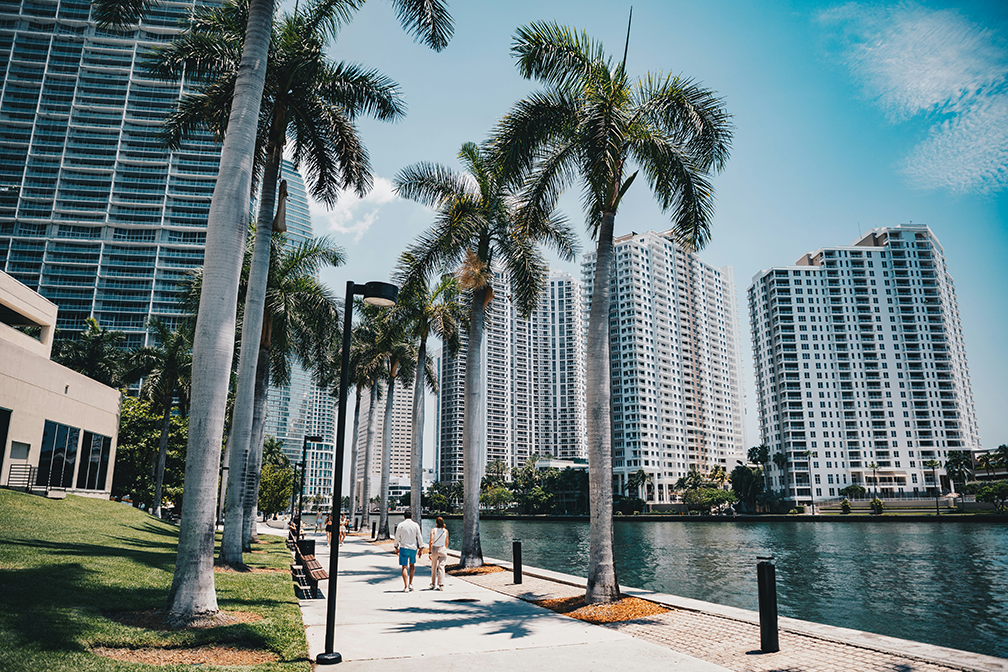
Understanding how outdoor environment practice builds Spanish for leisure and social contexts.
The Bayfront activities included among curated Brickell area outings for those wanting to learn Spanish in Miami create outdoor Spanish practice developing leisure vocabulary, social interaction patterns, environmental description language, informal conversation skills, and demonstrating Spanish utility for recreational rather than merely transactional or professional contexts. This outdoor practice proves particularly valuable for learners pursuing Spanish for travel enjoyment, social connections, or comprehensive life integration rather than narrowly professional or academic applications.
The outdoor environment vocabulary development through Bayfront practice builds descriptive Spanish for natural settings. Discussing weather, water, sky, plants, animals, outdoor activities develops vocabulary transferring to travel conversations, vacation planning, recreational discussions, or environmental topics requiring natural world description. This vocabulary extends Spanish beyond indoor professional or commercial contexts into broader life experience including outdoor recreation and nature appreciation.
The informal social Spanish developed during Bayfront activities contrasts with professional workspace or retail transaction language. Outdoor leisure contexts enable relaxed conversation, casual interaction patterns, social relationship building through Spanish – communication styles differing from task-focused workplace Spanish or transactional shopping Spanish. This informal register proves essential for friendships, travel companion interactions, or social Spanish extending beyond professional necessity into genuine personal connection.
The recreational vocabulary practice during Bayfront activities develops Spanish for hobbies, sports, leisure pursuits, entertainment discussions – conversation topics dominating casual social interaction. Learning to discuss interests, share experiences, describe activities builds Spanish for authentic personal expression rather than merely functional task completion. This personal-expression Spanish proves motivating by enabling discussing genuinely interesting topics rather than endless survival-phrase repetition.
The unstructured conversation opportunities during outdoor activities enable spontaneous Spanish practice. Unlike controlled classroom exercises or planned retail transactions, outdoor leisure creates opportunities for unpredictable interactions – commenting on views, discussing experiences, sharing observations, engaging strangers casually. This spontaneous Spanish production develops fluency requiring rapid unplanned expression impossible through purely structured practice scenarios.
The group social dynamics during Bayfront activities create peer bonding through shared Spanish experiences. Rather than purely academic or transactional relationships, outdoor leisure enables genuine social connections developing among participants through common enjoyable experiences conducted in Spanish. These authentic relationships prove motivating by demonstrating Spanish enabling real friendships rather than merely completing tasks or exercises.
The physical activity integration during outdoor Spanish practice supports kinesthetic learning benefiting certain learning styles. Walking, moving, gesturing, experiencing physical environments while practicing Spanish creates embodied memory associations strengthening retention beyond purely auditory or visual learning. This multisensory engagement particularly benefits learners struggling with traditional classroom lecture-based instruction lacking physical component.
The stress reduction through outdoor activity supports learning by reducing anxiety often accompanying intensive study. The Bayfront environment provides psychological relief from workspace intensity, enabling relaxed Spanish practice without formal assessment pressure. This relaxed practice builds confidence and fluency through comfortable experimentation impossible during high-pressure formal instruction sessions.
The Miami waterfront cultural context during Bayfront activities provides relevant practice for those planning Latin American coastal travel. Understanding waterfront Spanish, beach culture, maritime activities prepares participants for Caribbean, Mexican, Central American, or South American coastal destinations featuring similar waterfront recreational contexts. This contextual practice proves more relevant than generic classroom instruction lacking specific environmental preparation.
Complete practice locations at https://fluenz.com/spanish-bootcamp-miami
Essential Questions
Bootcamp vs. Luxury Immersion: What’s the Difference?
Those seeking efficient fluency through concentrated work find Miami provides intensive training across one focused week. You’ll receive 22.5 hours of personalized instruction blending one-on-one coaching with dynamic group activities, structured for rapid measurable advancement.
Fluenz Luxury Immersions operate in 17 destinations throughout Latin America and Spain, pairing rigorous language training with curated cultural experiences. These programs maintain high-quality instruction while advancing at comfortable pacing, incorporating private museum access, archaeological visits, exceptional dining, and boutique stays. Compared to Miami’s concentrated intensity, Luxury Immersions unfold at moderated rhythm balancing language development with cultural enrichment.
Key Differences:
Spanish Bootcamp Miami: Precision-guided personalized instruction combining individual and group formats for rapid, measurable fluency advancement in intensive U.S.-based program.
Fluenz Luxury Immersions (17 destinations): Elite coaching integrated with immersive cultural programming across international locations, progressing at relaxed rhythm.
How Does the Miami Bootcamp Work?
Training runs Monday through Friday from modern Brickell district workspaces. The week structures around focused language development designed for accelerated Spanish acquisition.
Pre-arrival Evaluation: Complete a comprehensive assessment beforehand, enabling customized instruction development based on your level and objectives.
Weekly Training: The program delivers 22.5 hours of individualized instruction combining focused one-on-one coaching with dynamic small-group activities, entirely in Spanish.
Curated Practice: Beyond workspace sessions, you participate in curated Miami outings around Brickell – Metromover, museum district, Brickell City Centre, Bayfront – applying new skills within authentic linguistic environments.
Continuous Adaptation: Your plan evolves as coaches monitor progress continuously, adjusting instruction to ensure effective daily progression.
Does Training Happen in a Classroom the Entire Time?
Learning happens throughout Miami’s diverse environments, not just classrooms. While utilizing modern Brickell workspaces for core instruction, Spanish practice extends citywide through curated outings focused on specific learning objectives. You’ll apply skills in restaurants, streets, businesses, and authentic Spanish contexts, transforming the entire city into your learning space.
Is it All One-on-One or Are There Group Activities?
The program blends individualized one-on-one instruction with dynamic small-group work throughout the week. Multiple expert coaches rotate through your sessions rather than assigning one dedicated tutor, each bringing distinct expertise while you remain the central focus. This exposes you to diverse accents and teaching styles reflecting real Spanish variety. Small-group activities add peer interaction dynamics impossible in purely individual coaching, while your learning remains carefully coordinated ensuring continuity and progress.
How Much Will I Learn?
Twenty-two and a half hours of personalized coaching across an intensive week replace slow fragmented learning with concentrated advancement. Outcomes vary based on starting point, dedication, and natural aptitude, but the intensive structure creates breakthrough conditions unavailable through conventional methods. Melissa Daimler from Fluenz training emphasizes: “The instructional design exceeded my expectations in terms of structure, cadence, personalization and community. Fluenz Immersion nails them all.” The methodology produces tangible progress whether starting from scratch or breaking through intermediate plateau.
How Long Does It Take?
The program operates Monday through Friday, totaling 22.5 training hours across five days. This business-week structure creates intensive immersion fitting standard work schedules – travel Sunday, return Friday evening or Saturday. Consecutive week enrollment enables extended study unavailable with international programs.
Is It Right for Me or Is It Too Intense?
This program serves driven, disciplined adults pursuing meaningful fluency and expecting tangible results. If motivated to advance rapidly and ready to dedicate full energy to Spanish during training, the program provides appropriate structure and rigor. Not for casual learners, but for those seeking transformation over relaxed study, it proves ideal.
You’re a strong candidate if:
Determined to achieve fluency quickly willing to invest substantial effort. Prepared to engage fully – intellectually, emotionally, linguistically. Welcoming demanding programs producing lasting transformation. Prioritizing deep learning over leisure. Explored conventional approaches now seeking results-driven intensive training.
It may not suit you perfectly if:
Wanting light experience requiring minimal commitment. Preferring relaxed pacing or unstructured formats. Uncertain about dedicating a week to intensive Spanish instruction blending individual coaching and group work.
What’s Included in the Program Fee?
The inaugural 2026 season (November, December 2026, January 2027) costs $4,800, while 2027 tuition increases to $5,275. This covers your comprehensive pre-arrival assessment, 22.5 hours of individualized training with expert rotating coaches, all instructional materials, lifetime license to Fluenz Spanish software package, and your personalized long-term Spanish program designed around your needs, goals, and strengths.
Not included: Accommodation, airport transfers, or meals. You arrange your own Miami lodging, dining, and transportation, providing flexibility in choices while enabling local participants to attend without hotel expenses. The hosting team provides lodging recommendations and comprehensive area guide.
Do I Work with the Same Instructor or Do Coaches Change?
You work with a coordinated coaching team rather than one instructor. Multiple experts rotate through sessions during the week, all trained in the methodology. This rotation provides valuable exposure to diverse accents and instructional styles matching real Spanish variety. Your personalized learning remains tightly coordinated behind scenes, with continuous progress tracking ensuring seamless continuity despite rotation.
Who Are the Typical Instructors?
Coaches bring professional accomplishments beyond native speaker credentials. The team includes former university professors, linguists, global executives, and award-winning writers. Each completes intensive training in the proprietary methodology, specializing in guiding high-performing English-speaking adults toward meaningful Spanish fluency. Their diverse backgrounds provide valuable insight helping learners navigate challenges while absorbing new linguistic structures.